

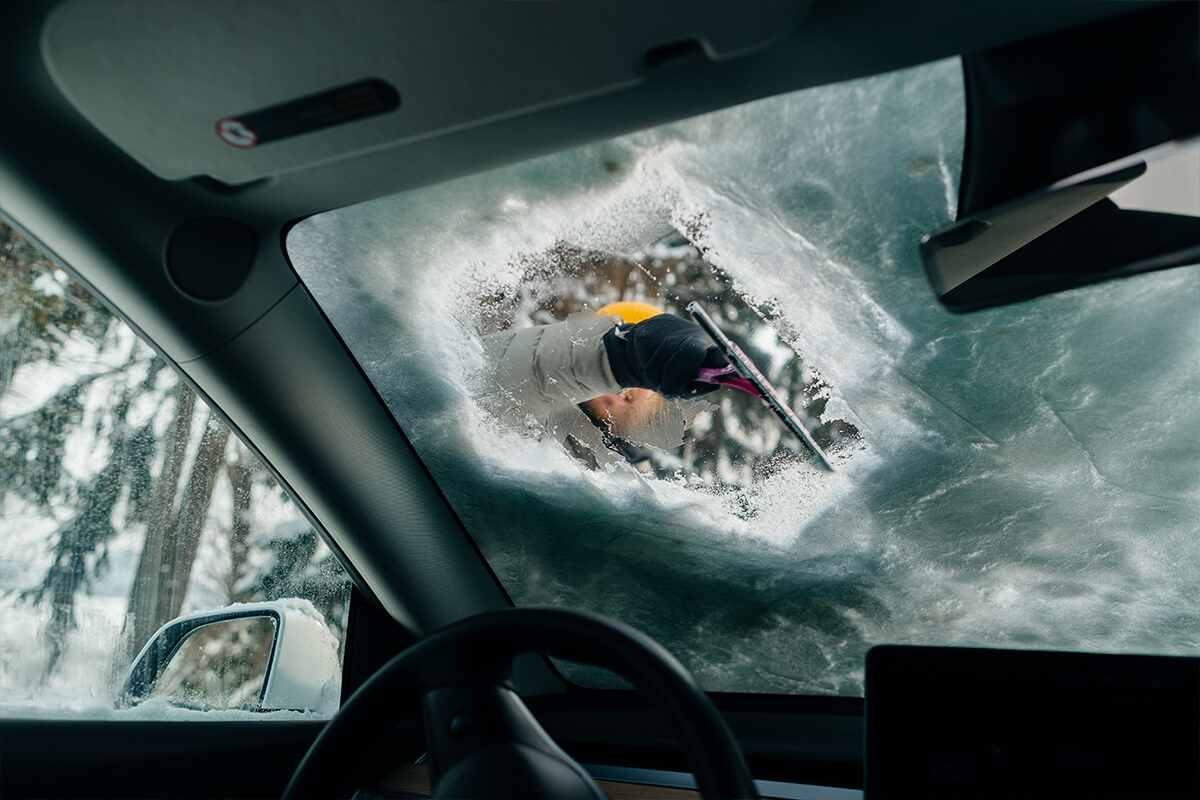
Seeing a frozen windshield in the morning while trying to get to work on time is more than just an inconvenience. It can also reduce visibility and create safety risks if the glass is not defrosted correctly.
Many drivers rush the process without realizing that certain methods can damage the windshield or make existing chips and cracks worse. In this blog, we will walk through the best way to defrost your windshield safely, explaining what causes frost to form, which techniques actually work, and how to protect your windshield in cold weather.
What Causes Windshields to Frost Over Overnight?

In cold weather, frost can show up faster than most people expect. In most cases, it forms when moisture in the air settles on your windshield overnight and freezes as the temperature drops.
This is especially common during late fall and winter in Canada. Between the temperature swings, freezing rain, and slush on the roads, windshields often pick up moisture even when they look dry. After a few hours parked, that moisture can freeze into a layer of frost.
It also explains why some mornings are a lot worse than others. Clear, calm nights make frost more likely, while cloudier weather can sometimes keep temperatures a little more stable.
The Importance of Using Proper Techniques to Defrost Car Windows

Not all popular methods for defrosting car windows are actually safe for your windshield. Some quick fixes might seem harmless, but they can put unnecessary stress on the glass or scratch the surface, especially if you are dealing with thick ice.
Some drivers make the common mistake of pouring boiling hot water over the windshield to melt the ice faster, but the sudden temperature change can cause the glass to crack, especially if there is already a small chip.
This is why it’s crucial to know the proper way to defrost car windows and windshields to avoid unnecessary damage and costly repairs.
Safest Methods to Remove Ice From Windshields

Before you start scraping, it helps to remember that ice is usually bonded tightly to the glass. If you try to force it off right away, you can end up scratching the windshield or putting stress on the glass in cold temperatures. Here are some helpful tips on how to safely remove ice from your windshield:
1. Turn on your defroster first
Let the vehicle warm up for a few minutes before you touch the ice. Even a small amount of heat helps loosen the bond between the ice and the glass.
2. Use a proper plastic ice scraper
A windshield scraper is designed to remove ice without scratching the surface. Avoid metal tools or anything sharp, even if it “seems” safe.
3. Scrape gently and use steady pressure
Aggressive scraping can scratch the glass and may worsen existing chips. A slower approach is safer and usually more effective.
4. Start from the edges and work inward
Ice often breaks up more easily near the edges. Working inward helps you avoid pushing ice into areas that are still frozen solid.
5. Use a safe de-icer spray if needed
If the ice is thick, a proper automotive de-icer can help soften it faster. Avoid household chemicals, which can damage trim, paint, or wiper blades.
6. Lift your wipers before freezing weather
If wipers are frozen to the glass, pulling them up prevents tearing the rubber and makes morning cleanup easier.
7. Clear snow from the roof and hood too
Loose snow can slide onto the windshield while driving or when you brake, instantly blocking your view again.
What NOT to Do When Defrosting a Windshield
In addition to pouring boiling water on your windshield, other methods can also cause problems that most drivers don’t realize until it’s too late. A few methods that drivers must avoid when they’re trying to defrost in a hurry are:
- Using metal tools or sharp objects: It might seem like a screwdriver, shovel edge, or metal scraper would get the job done faster, but these can scratch the glass and damage the surface. Even small scratches can create glare at night and make visibility worse over time.
- “Chipping” at thick ice: Some drivers try to break ice off in chunks by tapping or chipping at it. This puts direct pressure on the windshield and increases the risk of cracking, especially if there is already a small chip or weak spot.
- Turning on the wipers while they’re frozen: If your wipers are stuck to the glass, turning them on can tear the rubber or strain the wiper motor. It can also drag ice across the windshield and leave scratches.
- Using household chemicals to melt ice: Things like vinegar, bleach-based cleaners, or harsh sprays can damage rubber seals, paint, and wiper blades. Some products also leave a film on the windshield that causes streaking and glare.
- Scraping aggressively with too much pressure: A plastic scraper is safe, but only when used correctly. Pressing too hard can still scratch the windshield, especially if dirt or road grit is mixed into the ice.
How to Prevent Frost and Ice on Your Windshield Overnight
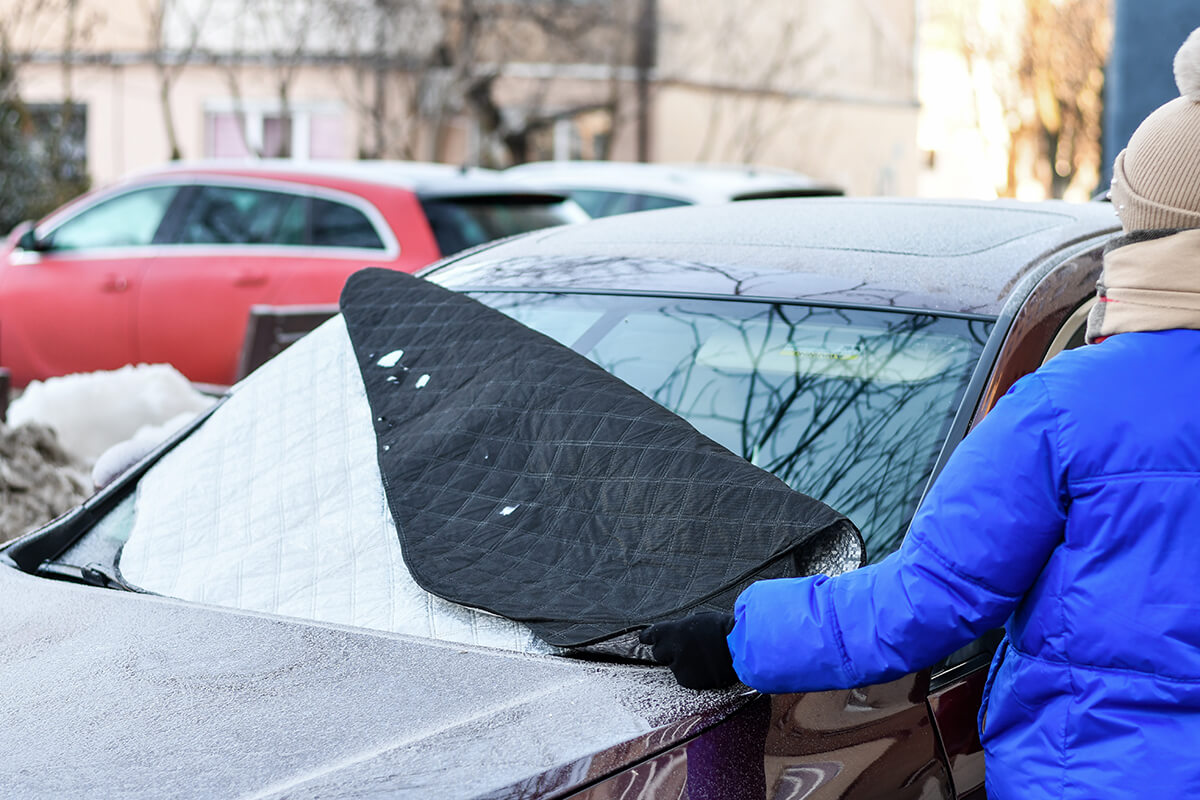
If you’re tired of scraping every morning, prevention is often the best approach. Simple steps the night before can reduce how much frost and ice forms overnight. While it won’t eliminate it in every situation, especially during freezing rain, it can save time and help protect your windshield over the course of the winter.
- Use a windshield cover (or even a thick towel in a pinch): A windshield cover is one of the easiest ways to prevent frost from forming directly on the glass. In the morning, you simply remove it and your windshield is much clearer. Just make sure it’s secured well so it doesn’t blow away overnight.
- Park in a garage or under cover whenever possible: Even partial shelter helps. Parking in a garage, carport, or covered area protects your windshield from freezing rain, snow, and direct exposure to cold air, which reduces ice buildup.
- Park facing east (toward the morning sun): If you park outside, try to face your windshield toward the sunrise. Even a small amount of morning sun can help warm the glass and make frost melt faster.
- Lift your wipers before the temperature drops: Wiper blades can freeze to the windshield overnight, especially after slushy driving conditions. Lifting them helps prevent the rubber from sticking to the glass and tearing when you turn the wipers on in the morning.
- Reduce interior moisture (to prevent fog and refreeze): If your car has moisture inside, it often leads to foggy windows that can freeze on the inside. Keeping your floor mats dry, removing wet items, and using the defroster properly helps keep the cabin drier overall.
- Clear off snow and slush before you park: If you arrive home with snow or slush sitting on your windshield, hood, or roof, it will melt slightly and refreeze overnight. Taking an extra minute to clear it before you leave the car can reduce ice buildup by morning.
- Make sure your washer fluid is rated for winter: Regular washer fluid can freeze in cold weather, which makes it harder to clear the windshield when you need it most. A winter-rated fluid helps prevent freezing and improves visibility during snowy or slushy driving conditions.
Can Defrosting Crack a Windshield?

Defrosting can crack a windshield, but it usually happens because of thermal stress. Windshields are built to handle heat and cold, but when freezing glass is hit with extreme heat too quickly, it creates stress in the material. If your windshield already has a small chip or weak spot, that stress can cause the damage to spread into a crack. This is one reason cracks often show up or get worse in winter, which can sometimes lead to windshield replacement if the crack spreads far enough.
The good news is that it’s easy to reduce the risk. The safest approach is to warm the windshield gradually using the defroster, avoid hot water, and never chip at thick ice. If you notice a chip after the ice clears, it’s worth getting it repaired sooner rather than later, especially in cold weather.
Key Takeaways
A frozen windshield might seem like a small winter inconvenience, but the way you deal with it matters. Using safe defrosting techniques protects your visibility and reduces the chance of damaging the glass. It also helps prevent small chips from spreading when temperatures drop and the windshield is under extra stress.
If defrosting reveals a chip or crack, Auto Glass Pro can help you take care of it before it gets worse. We offer professional windshield repair and replacement with experienced technicians and quality materials, so your windshield is safe, clear, and properly installed. Fill out our online form to get a free quote today.